Bounty Stars
DESIGNING CORE PRODUCT FLOWS FOR AN IGAMING PLATFORM
Worked on key product scenarios across navigation, deposits, rewards, withdrawals, case opening, and skin-based mechanics in a fast-moving iGaming product.
BountyStars is an iGaming product built around multiple engagement and monetization mechanics such as cases, rewards, upgrades, and user progression. The platform combines fast interaction flows with complex internal logic, requiring a balance between usability, clarity, and business goals.
My role focused on designing core product scenarios that directly affect user engagement, retention, and decision-making.
- Designed end-to-end UX/UI flows for core product features
- Structured logic for rewards, withdrawals, contracts, and engagement mechanics
- Improved clarity in complex user states and edge cases
- Adapted solutions for both desktop and mobile experiences
- Contributed to consistency through reusable UI patterns
The product included multiple high-impact mechanics — rewards, cases, withdrawals, contracts, and upgrades — each with its own logic, constraints, and edge cases.
The challenge was to make these flows intuitive, fast, and understandable without oversimplifying the underlying complexity of the system.
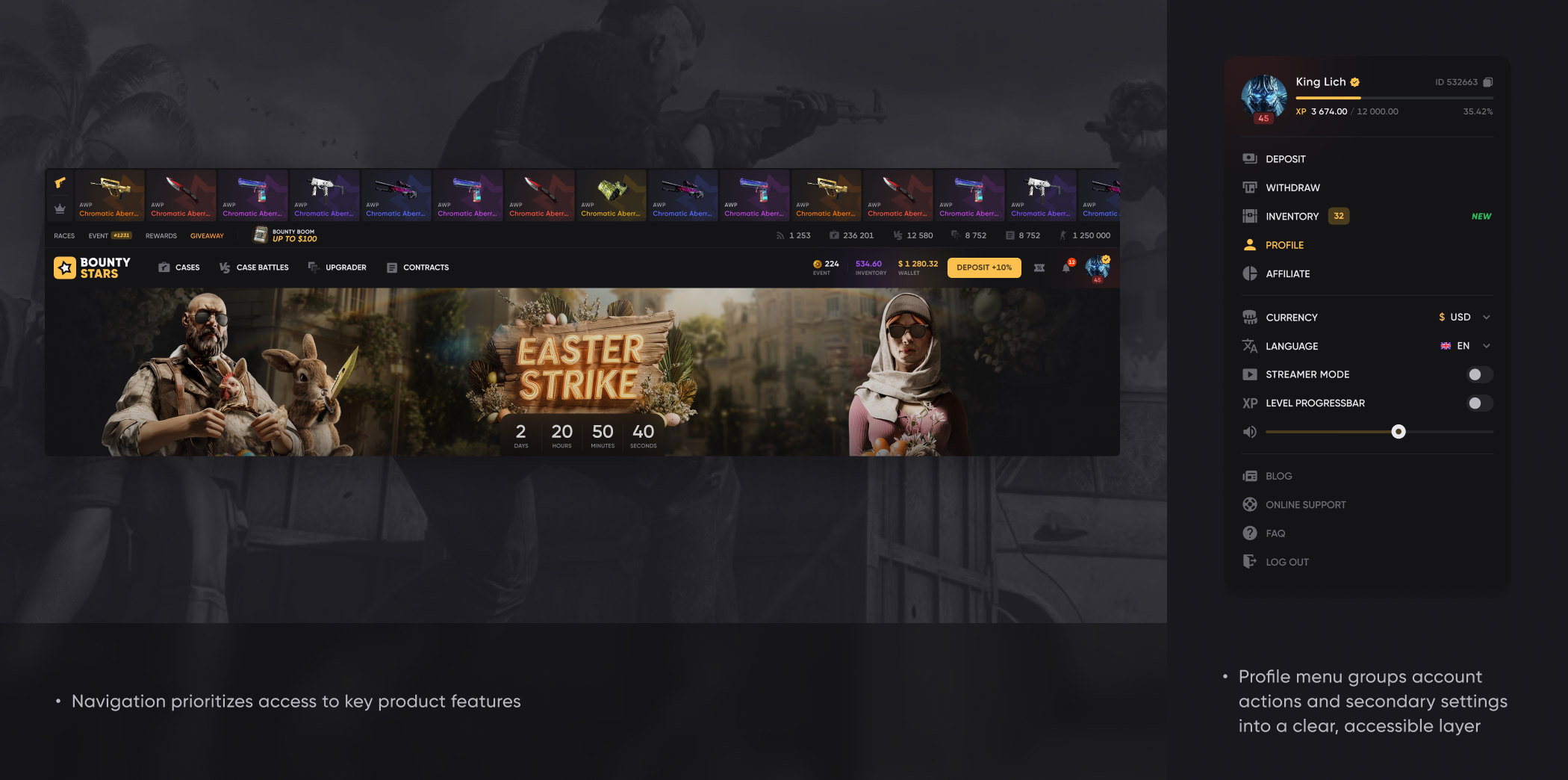
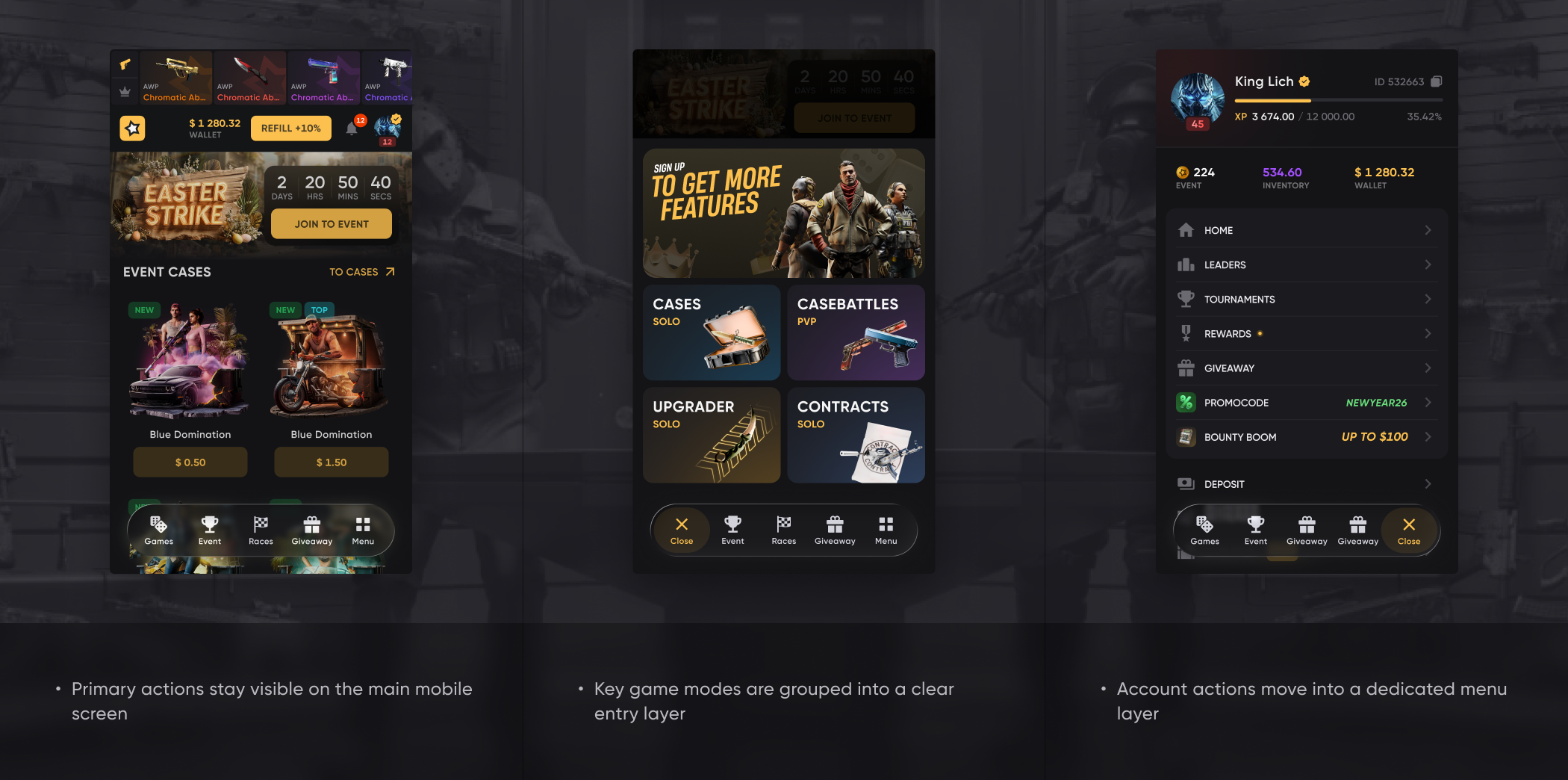
I redesigned core navigation patterns for both desktop and mobile contexts. The goal was to ensure fast access to key actions while adapting interaction behavior to different devices.
- Reworked header structure for desktop and mobile
- Adjusted navigation priorities based on screen size
- Improved access to profile and key features
- Maintained consistency across platforms
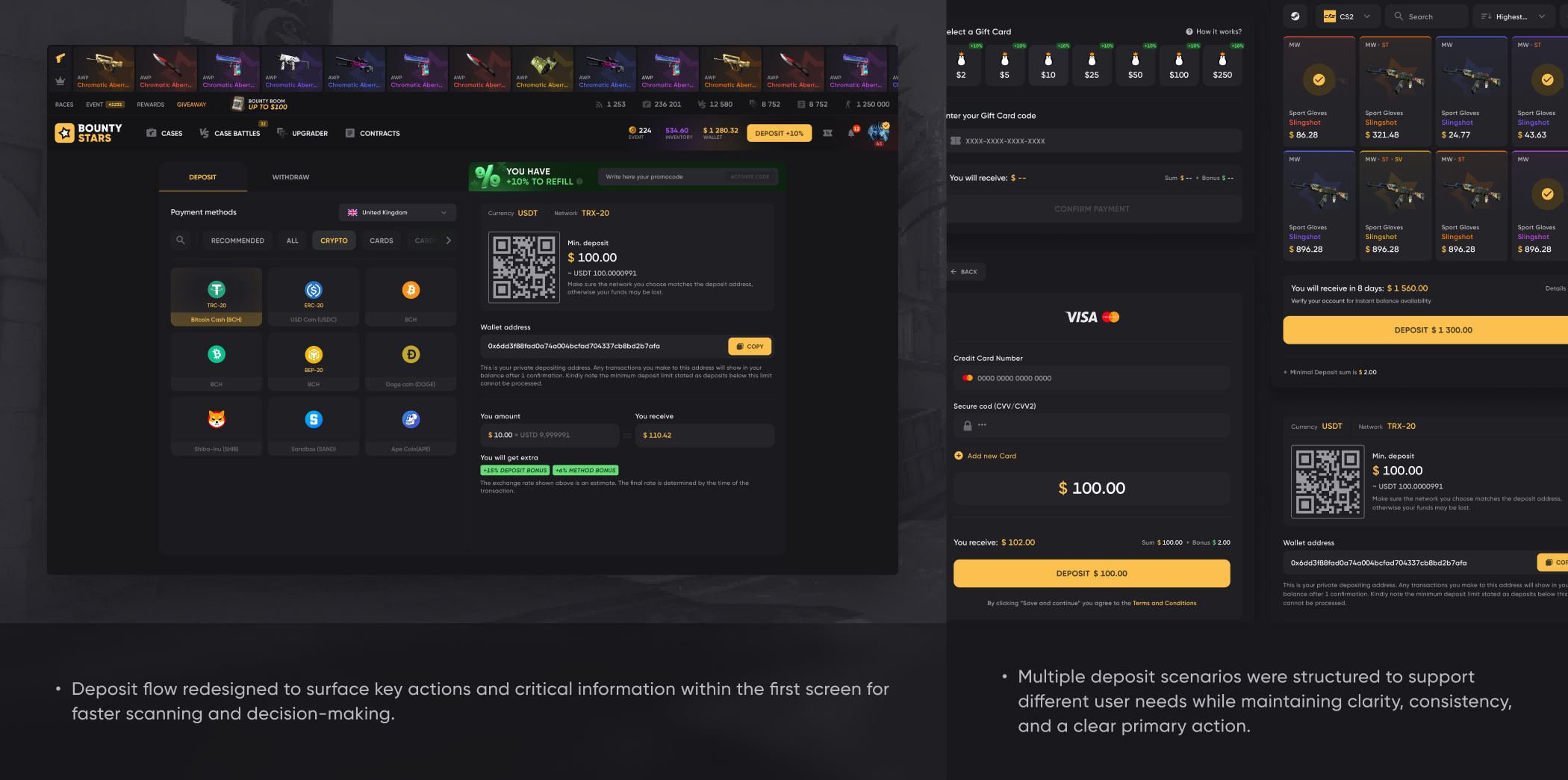
The deposit flow was redesigned to surface key actions and critical information within the first screen, reducing the need for scrolling in a conversion-critical scenario.
The goal was to simplify the decision-making process and make deposit conditions immediately clear, allowing users to proceed faster with fewer interruptions.
- Reorganized content hierarchy around primary user actions
- Moved amount, bonuses, and payment details above the fold
- Simplified the decision path by reducing visual and informational noise
- Improved visibility of final outcomes before confirming the deposit
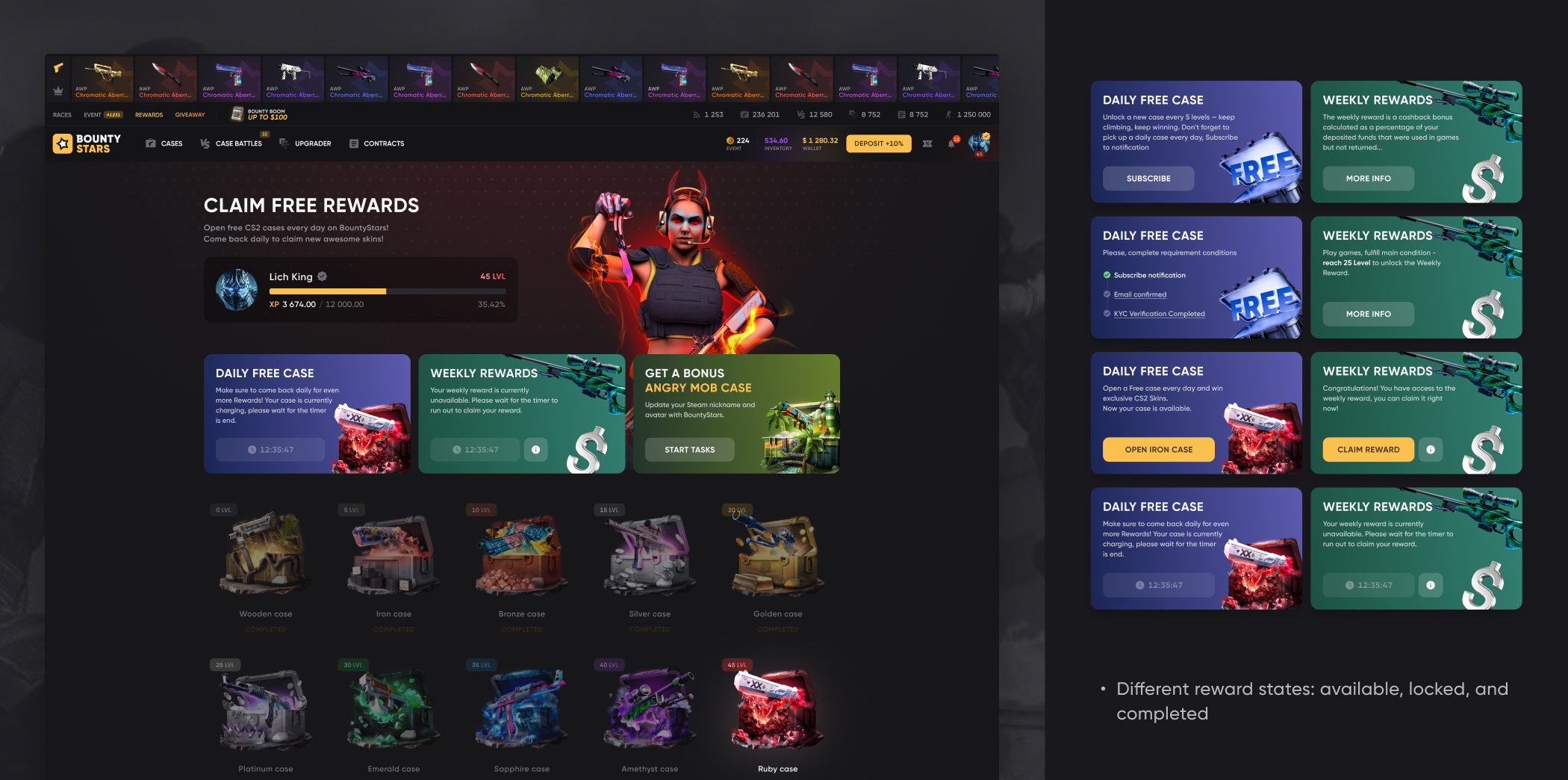
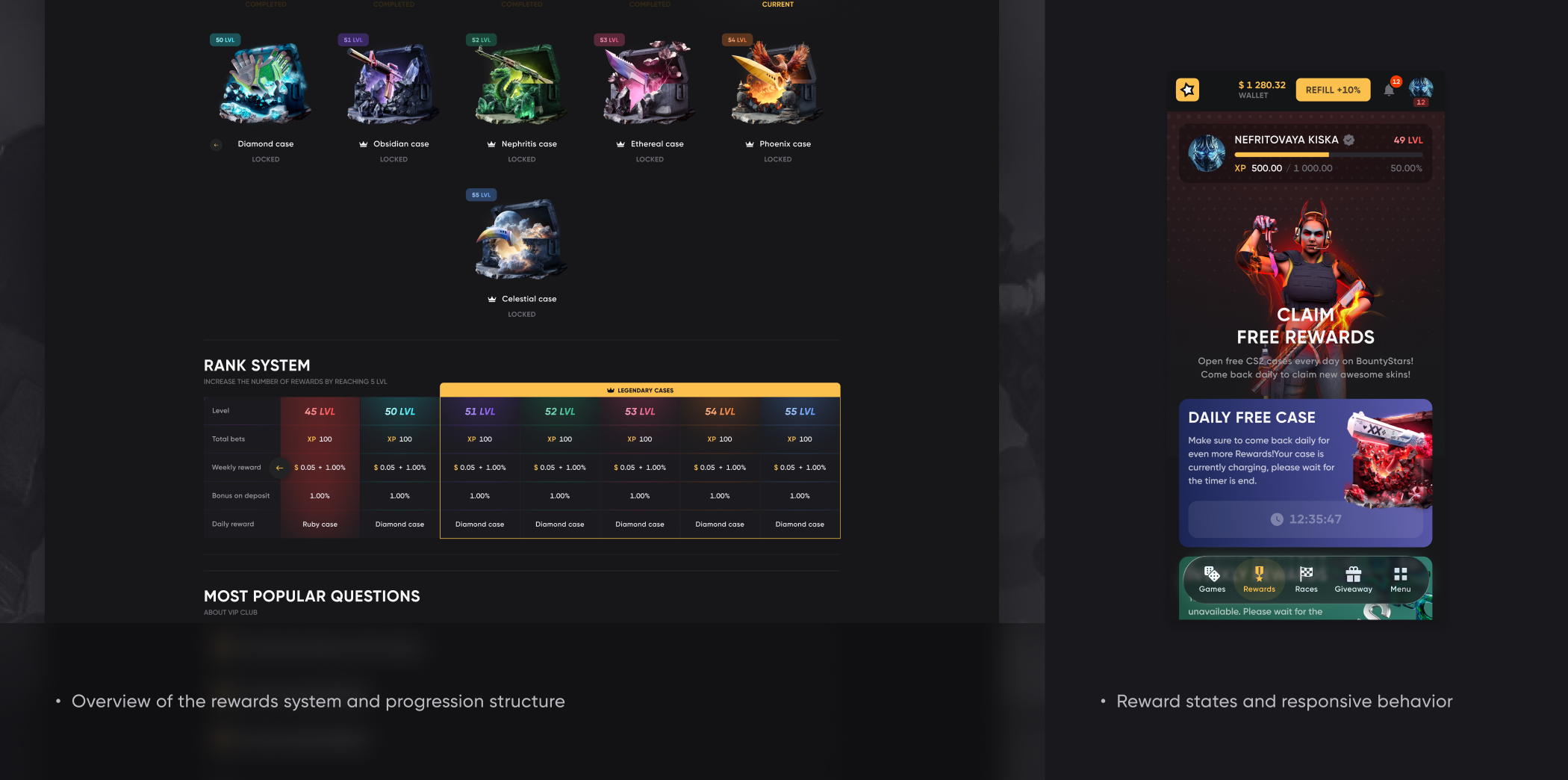
The rewards system was redesigned to improve transparency and user motivation, helping users better understand progression and encouraging continued engagement.
- Defined clear reward states and progression logic to reduce uncertainty
- Made availability and unlock conditions explicit and easy to scan
- Simplified user understanding of eligibility and next actions
- Increased perceived value and motivation through clearer feedback and structure
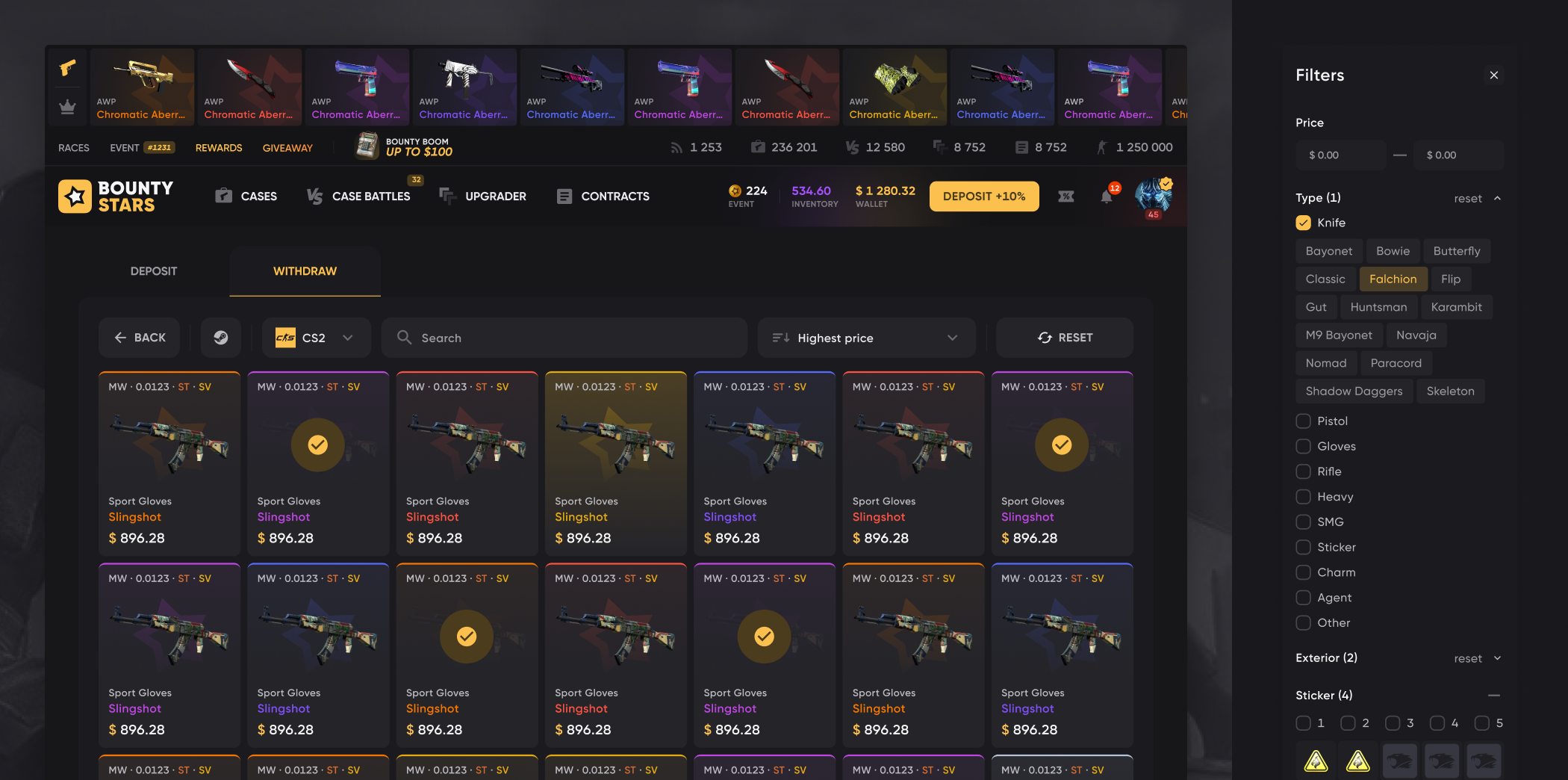
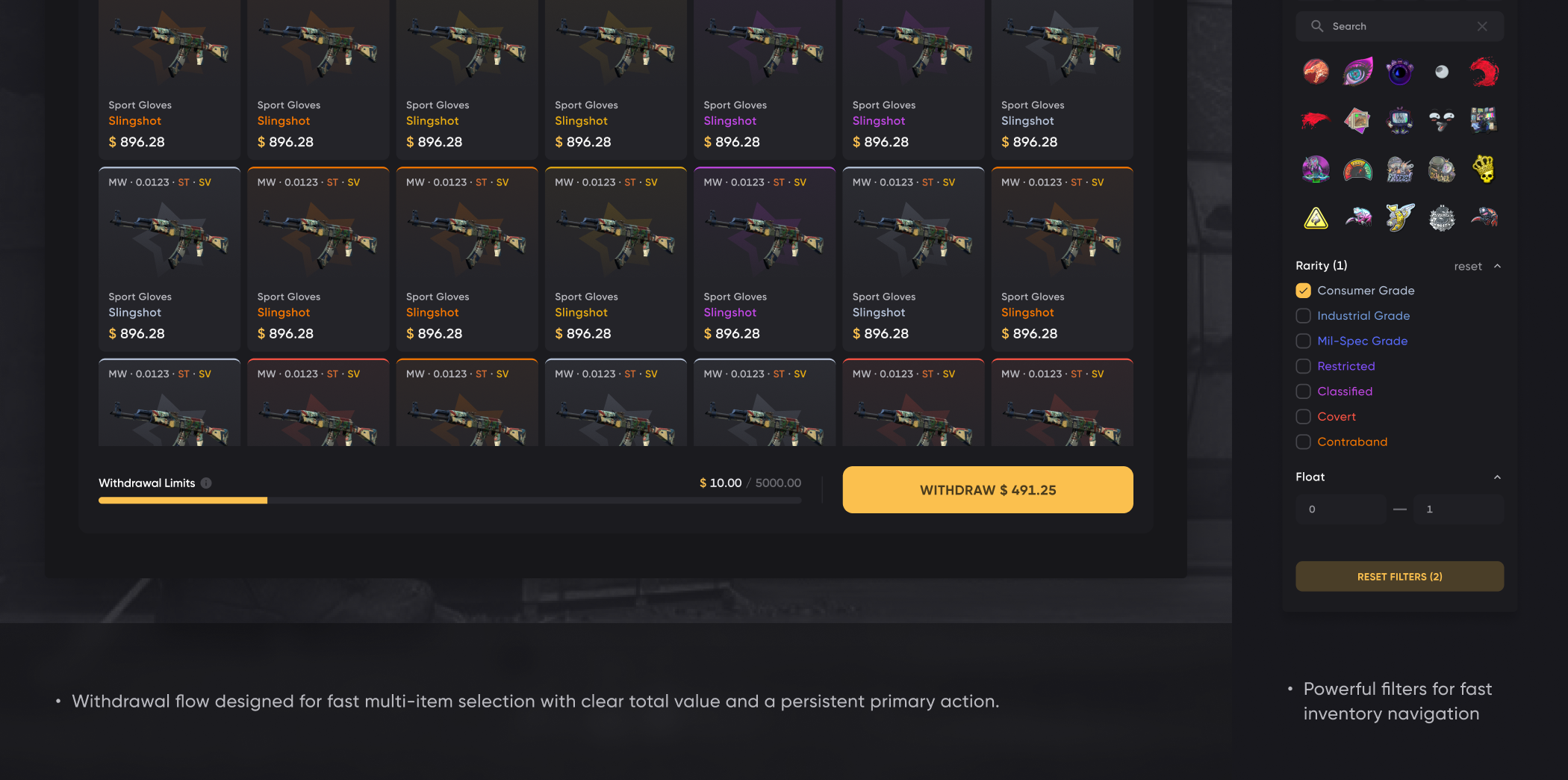
Withdrawal required users to navigate large inventories and make quick value-based decisions. I redesigned the flow to reduce overload and make item selection faster and more predictable.
- Prioritized key item attributes (price, rarity, state) in the hierarchy
- Introduced filtering and sorting for efficient navigation at scale
- Reduced friction in high-volume selection scenarios
- Enabled faster and more confident decision-making
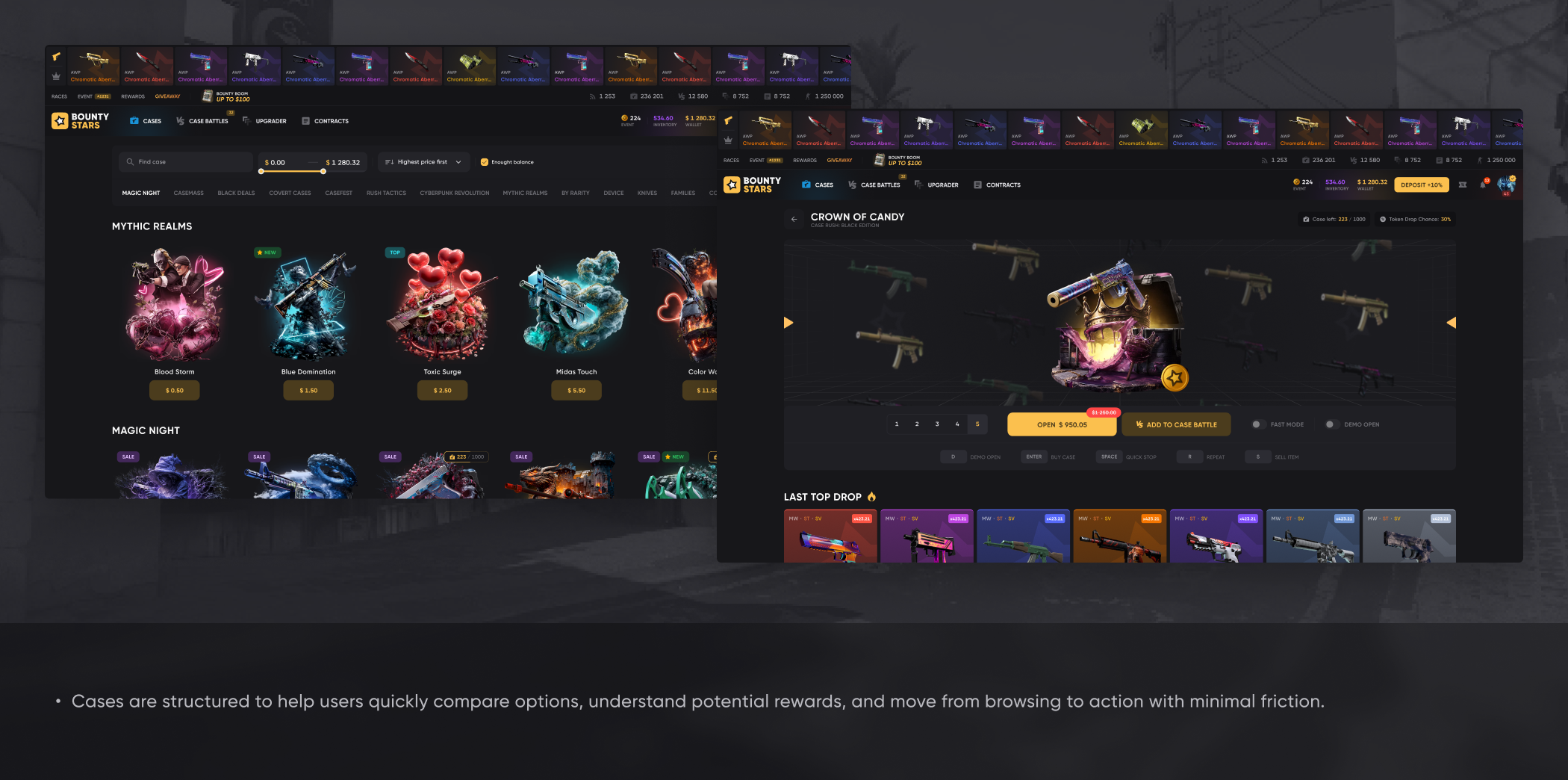
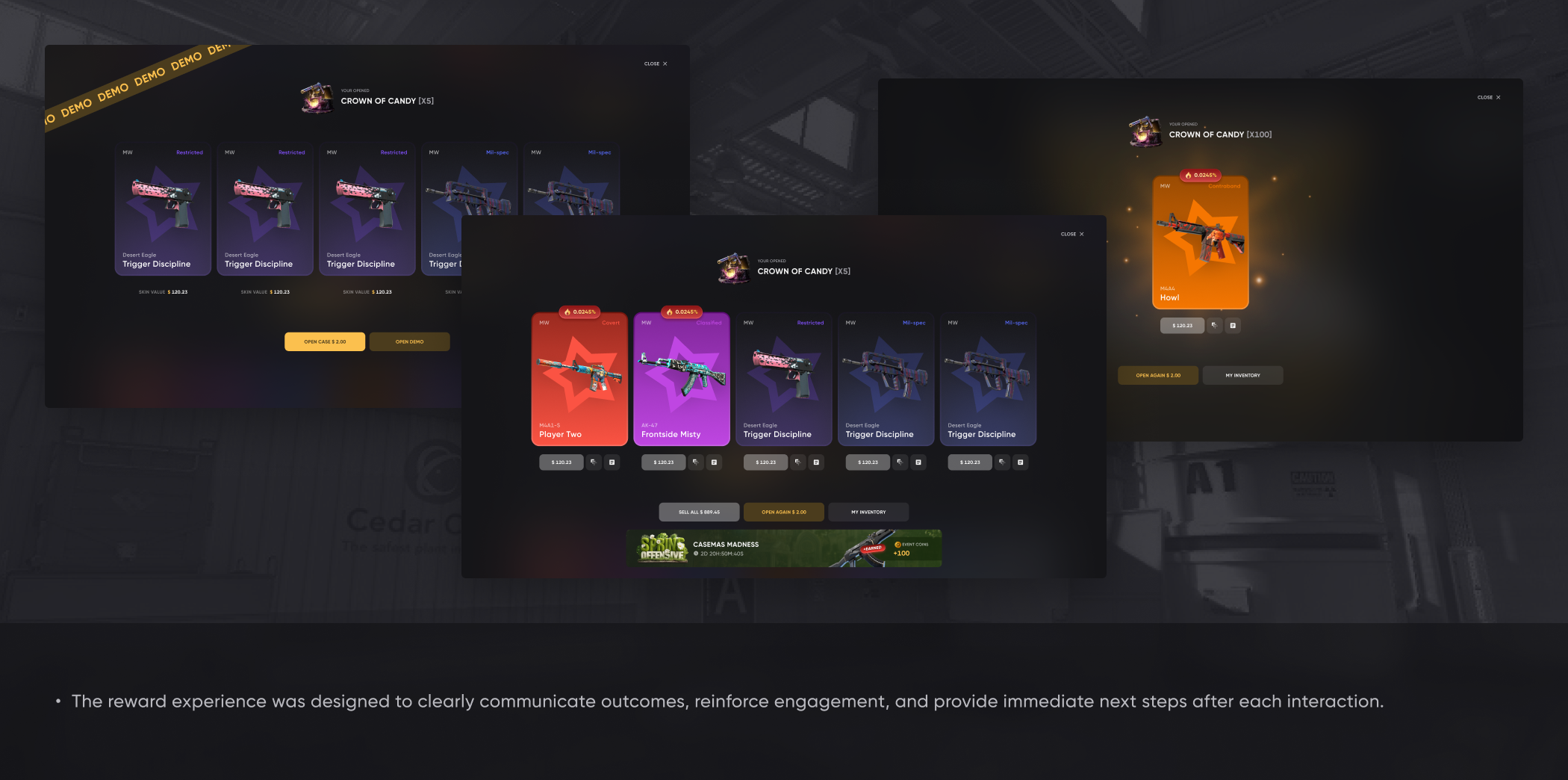
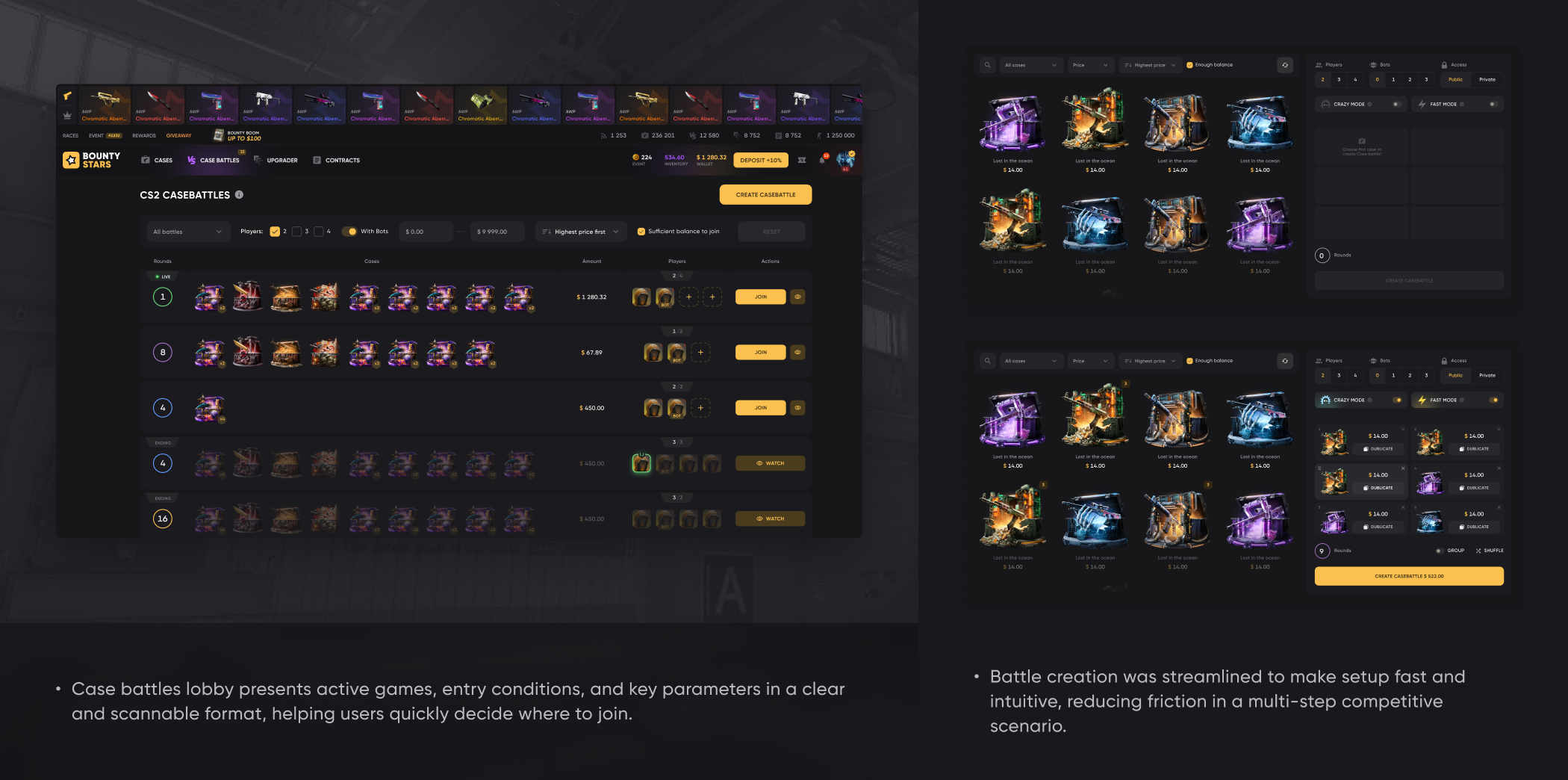
Designed case opening and battle flows to reduce friction in multi-step interactions while maintaining a strong sense of reward and engagement.
- Simplified entry and setup in case battles
- Structured case opening flow for faster decision-making
- Reduced friction in multi-step interactions
- Balanced visual feedback with usability
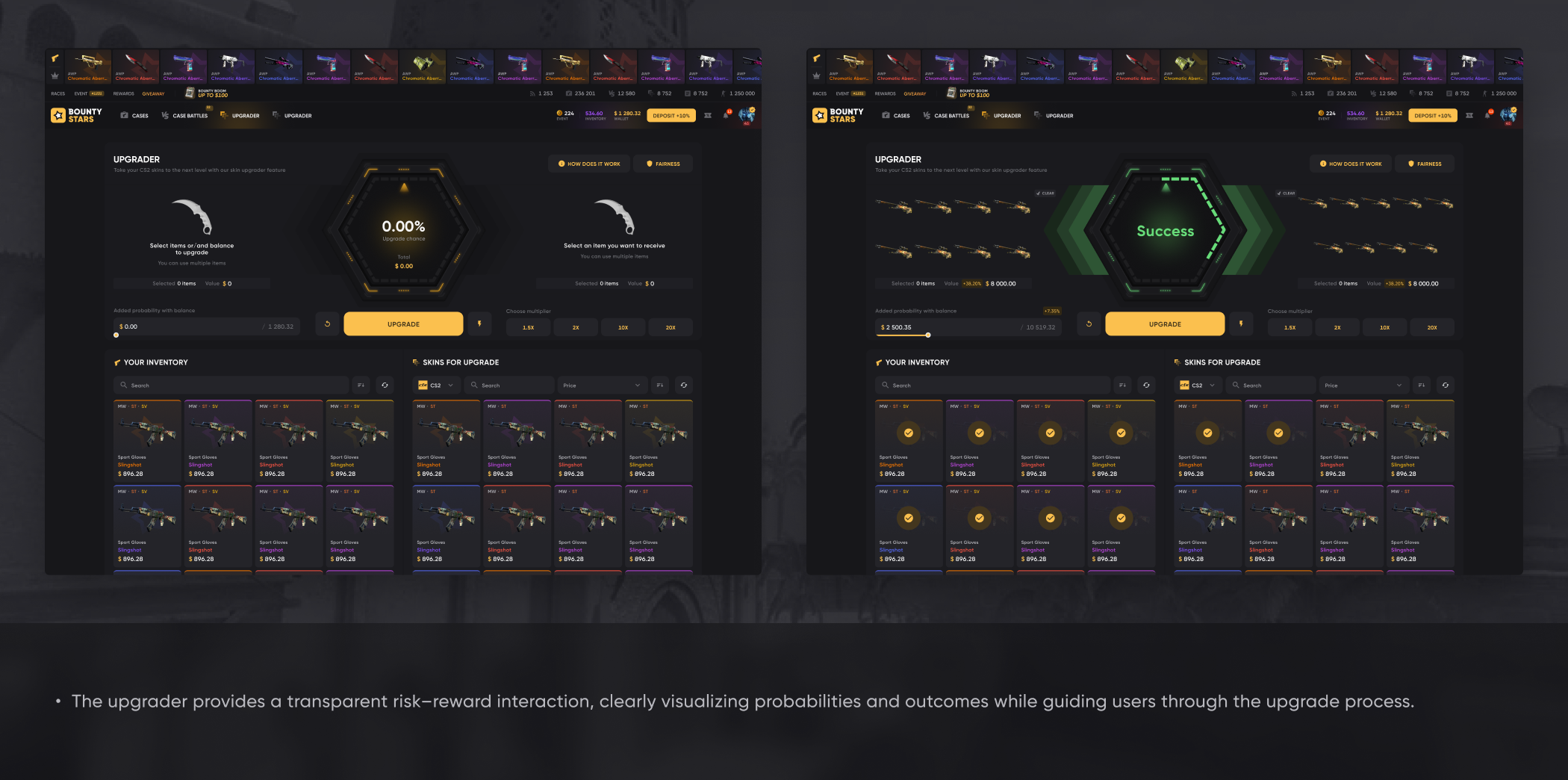
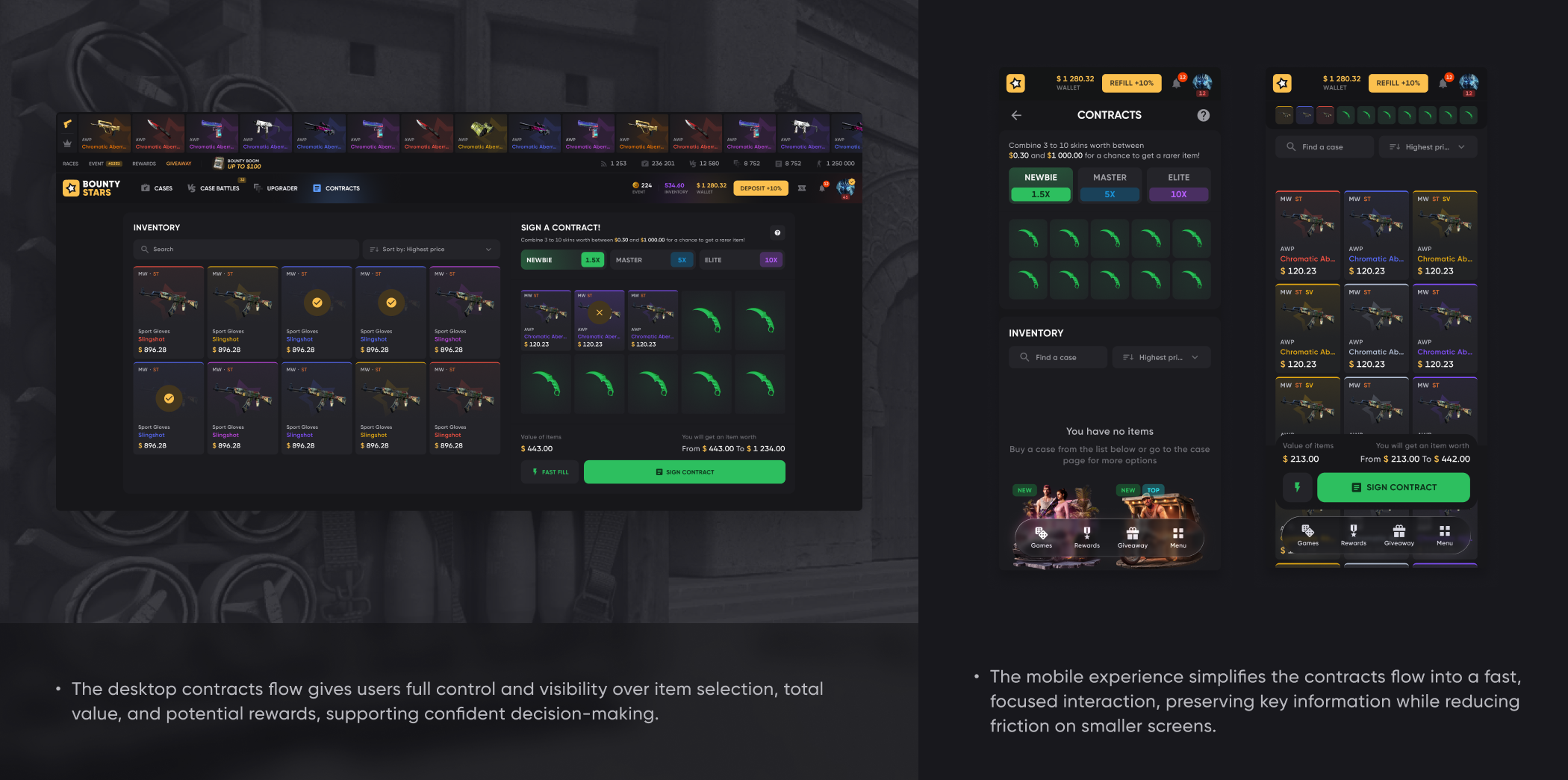
Skin-based interactions involve high-risk, multi-step decisions where users combine or upgrade assets with uncertain outcomes. The goal was to make these flows transparent, controllable, and easy to understand without oversimplifying the logic.
- Designed structured contract flows with clear value aggregation and outcome ranges
- Built upgrader UX with visible probability, risk, and reward relationships
- Simplified multi-step item selection and reduced decision friction
- Improved clarity of user actions, system feedback, and possible outcomes
The work focused on simplifying complex, logic-heavy interactions while preserving core product mechanics. Special attention was given to decision-making flows, where users interact with value, probability, and outcomes.
- Simplified multi-step interactions without losing control over outcomes
- Reduced cognitive load in value-driven decisions (deposit, selection, upgrades)
- Adapted patterns across desktop and mobile while preserving behavior consistency
- Built reusable interaction logic across multiple product features
The redesign improved clarity across core monetization and engagement flows, making complex mechanics easier to understand and interact with. Users were able to make faster decisions in key scenarios such as deposit, case opening, and item selection.
This resulted in a more structured product experience with clearer logic, reduced friction, and stronger alignment between user actions and system feedback.
The work laid the foundation for more predictable and scalable UX patterns across the product.